How Ready-Mix and Aggregate Producers Restore Trust Between Production and Receivables
Executive Summary
Most ready-mix and aggregate producers leverage digital tools for billing workflows. Dispatch is electronic, ERPs manage receivables and reporting, while signed delivery tickets are typically scanned. On the surface, the AR process is modern and structured, yet in many organizations, billing consistently trails production.
Delays do not usually stem from a lack of effort or technology. Accounting teams slow billing because dispatch records, signed tickets, and financial entries do not always match. Fixing errors after invoices are sent is more disruptive than resolving them beforehand. That caution is reasonable, but misplaced. When verification is concentrated at invoice release, billing speed slows in proportion to review workload. As volume increases, the cost of that delay appears in overhead, margin pressure, and working capital exposure.
An integrated AR structure does not remove verification. It allows teams to trust the billing process by making sure dispatch data, signed tickets, and financial records agree before billing moves forward. Customer master data aligns across systems. Delivery tickets are linked directly to their digital transaction records. Reconciliation occurs within the workflow when required, rather than being repeated at invoice release.
In this context, trust means transaction completeness: quantities, signatures, pricing, and customer data are aligned before billing begins. Which means invoices move forward without repeated manual confirmation. Accuracy is preserved, and billing progresses in step with production.
Operational Indicators of Limited System Trust
The following conditions indicate that teams do not fully trust their systems to agree without manual confirmation:
-
- Invoices are delayed while waiting for signed documentation to be received or confirmed.
-
- Customer credit limits in the ERP are not aligned with dispatch, creating situations where delivered volume exceeds approved limits and billing must intervene before release.
-
- Teams routinely re-confirm quantities, adjustments, or pricing even though the data was captured digitally.
-
- As ticket volume increases, review time and overtime increase with it.
-
- Credit limits, pricing logic, or customer data must be verified or updated in more than one system.
When several of these conditions are present, trust is being created manually rather than embedded within the workflow.

Why Billing Still Depends on Manual Verification
Over the past decade, many ready-mix producers have invested in digitization, while others operate with a mix of electronic and paper-based processes:
Dispatch systems
Manage load detail, operational pricing logic, and ticket generation.
ERPs
Maintain customer master data, credit controls, receivables, and financial reporting.
Delivery documentation
Signed tickets captured electronically, scanned, photographed, or returned physically.
Whether documentation is captured digitally at delivery or returned on paper, the issue remains the same: dispatch data, signed tickets, and ERP records must agree before an invoice can be issued. Dispatch systems record what was entered at the plant. Signed documentation reflects what was accepted at the job site. The ERP governs financial posting, credit exposure, and reporting. Each system performs its function accurately within its own boundary, yet none independently confirms that a transaction is complete and defensible across all boundaries simultaneously.
The gap emerges in timing and association. Signed documentation may be captured electronically at delivery, scanned later, or returned in paper form before being indexed. Regardless of format, documentation does not always enter the system in a consistent sequence or timeframe.
Customer data is typically not synchronized between dispatch and ERP thus requiring confirmation at invoicing. When documentation, data, or system alignment is uncertain, invoicing does not proceed. The issue is not pricing accuracy, but confirmation that operational and financial records agree.
In the absence of structural linkage, reconciliation becomes a human responsibility. Billing teams confirm quantities against signed documentation, associate proof with digital ticket records, verify customer account details, and resolve exceptions before invoice issuance. Although the systems are often digital, assurance that they agree still depends on manual coordination. Until verification is repositioned and data is connected within a controlled workflow, people effectively serve as the trust layer between platforms.
The Capital Cost of Billing Delay
NRMCA benchmarking places ready-mix DSO over 60 days, making even small shifts material at scale.[1] In ready-mix operations, revenue is earned at delivery but converted to cash only after invoicing and payment. Payment terms do not begin with delivery; they begin when the invoice is issued. Producers do not control customer payment behavior, but they do control when terms begin.
A five-day delay in invoicing can tie up roughly $2 million in receivables and cost approximately $144,000 per year in financing for a mid-sized producer.
Example:
Annual Revenue: $150,000,000
Average Daily Billing: ≈ $410,000
Five-Day Billing Delay: ≈ $2,050,000 deferred working capital
At a 7% blended borrowing cost or opportunity cost of capital:[2]
$2,050,000 × 7% ≈ $143,500 in annual financing cost
The increase in DSO embeds additional working capital into the receivables balance without generating incremental revenue.
Billing delay also affects financial visibility. Production metrics reflect delivered volume in real time, while receivable balances reflect invoiced activity. When production and receivables timelines diverge, short-term cash forecasting relies on estimates rather than invoiced balances.
The Capital Implications of Billing Delay
-
- Slower cash conversion despite unchanged customer payment behavior
-
- Increased working capital tied to completed but un-invoiced work
-
- Higher reliance on credit facilities
-
- Reduced precision in cash flow forecasting
Even modest billing delays carry measurable capital consequences. Structural alignment that positions invoicing closer to delivery reduces this exposure at its source.

The Margin Cost of Manual Intervention
When verification depends on manual review, billing capacity scales with labor. As ticket volume increases, review workload increases with it. Overtime becomes the mechanism that stabilizes the process. Administrative overtime does not generate new revenue; it preserves revenue already earned while increasing cost per invoice.
Consider a producer with five billing staff, each averaging eight hours of overtime per week, at a fully loaded rate of $55 per hour:
5 employees × 8 hours/week × $55/hour × 50 weeks
= $110,000 in annual overtime expense
At a 5 percent net margin[3], offsetting that expense requires:
$110,000 ÷ 5% = $2,200,000 in additional annual revenue
This producer would need to generate more than one million dollars in additional revenue simply to offset the cost of manual verification. Revenue growth typically requires higher volume, higher volume often means more tickets, which directly increases reconciliation workload if structure does not change. Without structural alignment, revenue growth expands administrative cost rather than improving margin.
Reestablishing Trust Within the Transaction Lifecycle
Improvement does not come from eliminating verification. It comes from structuring where and when verification occurs so that confirmation is embedded within the transaction lifecycle rather than concentrated at invoice release.
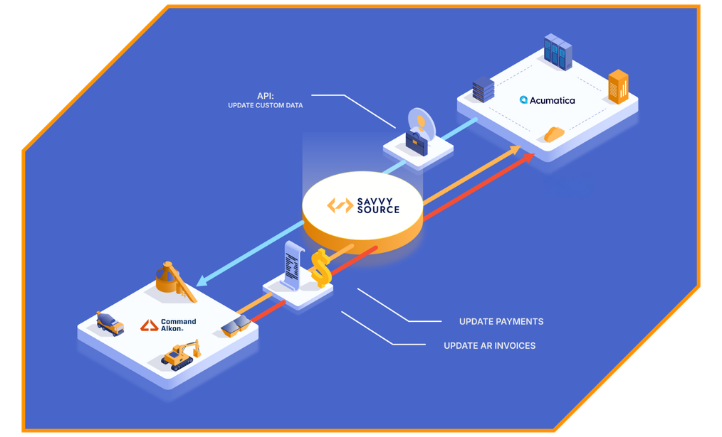
Step 1. Establish Clear System Authority and Synchronization
Trust begins with clear ownership of data. The ERP serves as the authority for customer records, credit limits, payment terms, and financial reporting, while dispatch manages load detail and operational pricing. Those systems must remain synchronized, so dispatch operates from current customer and credit information. When roles are defined and data stays aligned, invoice release does not require manual confirmation of account status. The controls are already applied before billing begins.
Step 2. Capture and Associate Documentation at Return
Signed delivery documentation, whether captured electronically at the job site or returned in paper form, should be linked to its corresponding ticket as soon as it is received. When documentation is attached immediately, missing signatures, quantity discrepancies, or field adjustments are identified early. Issues can be resolved while the delivery is still recent and the people involved can clarify what occurred, rather than days later during invoice preparation.
Step 3. Structure and Automate Reconciliation Within the Workflow
Reconciliation should be embedded within the workflow and built to be executed automatically based on defined controls. Only transactions that trigger an exception require human review, eliminating the need to manually re-verify each ticket at invoice release.
Step 4. Release Invoices by Defined Exception
Invoices move through the queue when required elements are verified and trusted. Which means clean transactions have no need for manual intervention. When an exception is identified, the billing team steps in, using the necessary research and judgment. Human review is now focused on outliers rather than on every invoice.
Step 5. Maintain ERP Financial Governance
As invoices move through defined controls, they enter the ERP with documentation already aligned. Accounting now works from confirmed transactions rather than correcting mismatches at posting. This results in the ERP remaining the financial system of record, reflecting completed work rather than reconciling it.
When verification is repositioned and system roles are clearly defined, billing moves from reactive review to a controlled, predictable process.

Case Study: Structural Alignment Built Intentionally
In 2019, a multi-site ready-mix producer operated with labor-intensive, paper-based workflows. Documentation moved physically between plants and accounting. Verification occurred at invoicing, and billing capacity was constrained by manual coordination.
The digitization journey began with document control. An enterprise content management platform centralized storage and indexing of tickets, batch documentation, and financial records. This established structured document authority before transactional automation was introduced. From there, accounting workflows were incrementally automated, and reconciliation steps formalized. Documentation capture became standardized, and verification began shifting upstream rather than occurring at invoice release.
At the time, core systems were on-premise and the ERP of record was Microsoft Dynamics. As volume and operational complexity increased, leadership made a deliberate decision to streamline infrastructure and migrate to cloud-hosted platforms. In 2024, the organization transitioned to Acumatica, a cloud-native ERP. The conversion was significant, yet accounting workflows experienced minimal disruption. Document capture, indexing logic, verification controls, and reconciliation workflows had been engineered modularly, allowing the ledger to change without dismantling the workflow structure. The ERP evolved while the underlying control framework remained intact, enabling scale without reintroducing manual coordination.
By 2025, the organization operated at four times the revenue level present at the beginning of the digitization effort, processing more than 131,000 delivery tickets across multiple plants during the year. Despite this increase in volume, accounting headcount remained flat. Team members who had previously worked 50 to 60 total hours per week returned to standard 40-hour schedules, and some transitioned to four ten-hour shifts without backlog.
Measured outcomes included:
-
- Billing speed improved by 20 percent.
-
- DSO improved by four days without altering credit policy.
-
- Overtime was eliminated despite materially higher ticket volume.
-
- Labor efficiency produced the equivalent of approximately $500,000 in annual revenue capacity without increasing sales volume.
The outcomes reflect the practical impact of structurally aligned billing systems, measurable in working capital, margin preservation, and workforce sustainability.

Execution Capacity and the Role of a Partner
Sustained improvement in billing performance requires technical capability, industry familiarity, and a clear understanding of the financial outcomes being pursued. Ready-mix organizations may possess these qualities internally; however, those same teams often carry significant operational workload. System alignment, ERP migration, workflow automation, and exception logic design require concentrated effort over extended periods. Without dedicated capacity, initiatives stall or move forward incrementally without a defined end state.
An experienced partner extends internal bandwidth while contributing practical knowledge of ready-mix transaction flow, ticket volume pressure, documentation controls, and credit exposure management. That experience informs design decisions early and helps prevent manual reconciliation from resurfacing in another form. Equally important is responsiveness. When billing cadence is affected, resolution must occur immediately. Direct communication and rapid adjustment protect invoice timing and working capital exposure.
Effective partnerships also involve continuous refinement. As operations evolve, workflows are revisited, friction points are identified, and incremental improvements are applied. Structural alignment is not achieved once; it is maintained through ongoing collaboration and shared accountability for outcomes.
This combination allows operational teams to maintain continuity while structural changes are designed, tested, and refined. When technical execution, industry context, and urgency align with financial priorities, transformation becomes sustainable without overloading existing staff.
Closing: Designing Trust into the Structure
Throughout this paper, trust has referred to systems and documentation aligning before billing advances, so invoices do not depend on manual confirmation at release. When dispatch records, signed tickets, pricing logic, customer data, and ERP records stay aligned within the workflow, billing reflects completed transactions rather than delayed reconciliation.
As verification shifts earlier in the process, invoice timing begins to follow production more closely. Revenue conversion becomes more predictable. Working capital exposure declines because terms begin on confirmed work, not delayed reconciliation. Administrative effort moves away from cross-system coordination and toward defined exception handling, allowing volume to grow without proportional increases in staffing or overtime.
The case study demonstrates these outcomes in measurable terms: faster billing, improved DSO, elimination of chronic overtime, and stable headcount despite materially higher ticket volume. These results were achieved not by reducing control, but by placing control at the right points in the process. In an industry measured in loads delivered per day and margin per cubic yard, billing performance directly influences financial performance. Structure determines whether billing trails production or scales with it. When systems are aligned and verification is built into the workflow, billing becomes a predictable financial process capable of supporting sustained growth.
[1] National Ready Mixed Concrete Association (NRMCA), Performance Benchmarking Survey (PBS), 2024 Edition.
[2] Based on typical commercial borrowing rates and blended cost of capital ranges observed in mid-market industrial firms.
[3]National Ready Mixed Concrete Association (NRMCA), Performance Benchmarking Survey (PBS), 2024 edition. Net margin ranges vary by revenue tier and region